Showing posts with label two. Show all posts

Saturday, March 19, 2016

Boat Plans Bartender | Two Day Cruise – Part 2 Burnham to Bradwell

Boat Plans Bartender


Scow


Safe Water Mark


Bradwell Marina

It was with a little trepidation that I stepped onto the platform at Burnham-on-Crouch railway station where I was to be greeted by the owner of yacht Ladybird. My trepidation was not to do with meeting him, but with facing the fact that I was going to start a short cruise involving more than would be required of a day sail with Pike, my Iain Oughtred skiff. We would be leaving the River Crouch for a sail through the Ray Sand Channel, which would mean crossing the narrow isthmus of sand between Ray Sand and Buxey Sand. The return trip would be via the Swin Spitway at the eastern extremity of the Buxey Sand.

The Met Office Inshore Shipping Forecast for Gibraltar Point to North Foreland was: ‘SW 3, occasional rain, fair later.’ In fact, the rain came later that night when we were snugly berthed at Bradwell Marina. It continued into the early morning of Thursday, 20thAugust.

High Water for Burnham on Wednesday 19th was not until 15.49, which gave us ample time for getting to the yellow marker buoy from where we would sail northwards across the shallows for the Ray Sand Channel. At midday we cast off from Ladybird’s mooring at Rice and Cole and we powered clear of neighbouring boats before making sail.

We anticipated that our crossing of the sand at the shallowest point would take place about an hour before HW Burnham. There were surprisingly few boats on the move, apart from a number of Burnham scows being sailed by youngsters. The Foulness Firing Range launch was anchored off Foulness Point and red flags were displayed on the south bank indicating that firing was taking place. We already new that because periodically, there were emissions of black smoke followed by the sounds of explosions. Rather than firing rounds, it appeared that the burning off of outdated explosives was taking place.

A SW wind of force two gently wafted us over the incoming tide to give us two to two-and-a-half knots, bringing us to the all important yellow marker buoy. We arrived there a little later than planned, but that gave us the advantage of deeper water for crossing the hidden isthmus under Ladybird’s keels. We had an updated, detail chart showing two safe water buoys with vertical red and white stripes. Sure enough they were picked out by the skipper and confirmed to be so by further inspection through binoculars. They gave us reassurance that we were where we should have been. By then the wind was on ‘Ladybird’s’ port quarter and it increased in strength, possibly to a force three, giving us a good speed of over four knots. Far ahead to port there was the unmistakeable outline of Bradwell Power Station, which was very close to our planned destination at the marina.

Our course was parallel to the eastern fringes of the low-lying Dengie Peninsular. Ladybird’strack matched the zero metre line on the chart, but with the depth sounder showing four metres, giving us three metres to spare.

At the northern end of the Peninsula, beyond Tillingham Marshes, there’s the ancient landmark of St Peter’s Chapel. This historic building is a useful feature for taking compass bearings, and we used it for confirming our position in relation to Bachelor’s Spit, over which we passed with only a metre to spare - and that on a falling tide!

To avoid the ebb from the Blackwater we sailed as close as we dare to Sales Point at the entrance of the river, but beyond that, and hard on the wind, the current forced us further and further into deeper and faster flowing water. Had we not resorted to motor sailing we would have been forced to anchor until the tide or wind changed.

With only a mile to go, we furled the Genoa, started the engine and chugged into the wind, so as to arrive at Bradwell Marina in time for an evening meal. We walked a short distance to the Green Man pub where the skipper treated me to a deliciously tasty meal of fresh haddock and chips.

As is customary for me on the first night of a cruise, I did not sleep well. I fitfully slumbered, periodically waking to listen to the pitter-patter of rain and to speculate about the next day.

(Part 3 to follow)

Links

Two Day Cruise
http://bills-log.blogspot.co.uk/2015/08/two-day-cruise.html

Dengie Peninsula
https://en.wikipedia.org/wiki/Dengie_peninsula

St Peter’s Chapel
http://www.bradwellchapel.org/index.html

Green Man Pub
http://greenmanbradwellonsea.co.uk/ 


Do you find information about Boat Plans Bartender are you looking for? If not, below may help you find more information about the Boat Plans Bartender. Thank you for visiting, have a great day.

Wednesday, March 16, 2016

Boat Plans Bolger | First two handed sail may as well make it a race

Boat Plans Bolger


RPNYC ran its two handed series today - a 17 miler around the cans in Wellington Harbour.  Forecast was dubiously big from the Metservice and didnt align with Windfinder, Windguru, Metvuw etc.  Started off with gentle zephyrs and blew 20s for some of the course.

We learnt the boat really fast today, including deploying the code zero, having a couple of great upwind legs, and using the A6 for a speedie run past Somes Island to Days Bay.  On the way back past Somes Island, the breeze had built and we tucked in a reef.  Lesson number 1 - dont assume the reef line has been run and check it at the dock!  Running a reef line took ages and cost us speed and distance on the fleet.  A good reach home and to our relief, we didnt embarrass ourselves by not coming first across the line.

Next challenge was pulling down that huge main two handed while it was blowing pretty hard by then and the gusts in the inner harbour were not helpful.

A great first sail - lots to learn.  She is a dream to drive and well behaved.  We didnt make her go as fast as she is used to fully crewed but we held a steady course to have a great day on the water in decent breeze.  She is running beautifully - canting properly and easily from the wheels.  Some two handed systems to sort out but that is easy.

Great first two handed day out -  many more to come!


Do you find information about Boat Plans Bolger are you looking for? If not, below may help you find more information about the Boat Plans Bolger. Thank you for visiting, have a great day.

Monday, March 7, 2016

Plywood Boat Plans Australia | Two more sailing days

Plywood Boat Plans Australia


Last Wed night we had Ben Gladwell from Boating New Zealand magazine join us for a race as he wanted to review Blink, hed also organised a chase boat with well-known local pro photographer Chris Coad.  Chris took some pics of the inside of the boat first, and then was in a chase boat for on-the-water pics.  Ben steered for almost all of the race, and we had a great time gybing down Evans Bay flying the A2.

Yesterday (Saturday) was the second race day of the Xmas series at RPNYC.  The forecast was 5 knots variable and the day was indeed glorious, still and hot in the morning, so we were quite comfy with only 6 people for harbour racing.  Then a sea breeze - which is pretty uncommon here - started up at 12-15 knots for the first race.  This was a short windward-leeward and I knew this wouldnt suit us well yet, were still refining our furling technique and timing, and no decent chances to stretch our legs.  Add to that some minor nightmares, like a Div2 boat being right in our way where we wanted to start at the pin, and refusal of the A2 to unfurl quickly at top mark roundings (we got it sorted eventually, though, and learned a lot in the process), plus I horribly mis-estimated timing for both hoisting (underestimated) and furling (overestimated)... lets say our handicap would have improved and leave it at that.  We did, however, make a very good job of our general boat handling -- tacks, gybes, etc all pretty slick given how things were really quite busy on the short course.

Second race was a harbour course, more suited to us, but by this stage the breeze has started to get very light, and the whole Div 1 fleet were pretty much gybing through wide angles trying to keep speed on and all pretty close together.  We rounded the bottom mark and got the Code 0 hoisted, thinking that this would be just the thing... and then the breeze got up to 8 or so knots, then 10, then 12 ... so we took it down again.   Now using the light jib, we were gauging up on Ran Tan ahead of us  while the rest of the fleet had gone right.  they tacked away onto port near Somes island,  we decided to go a wee but further and got a 40° lift.  Not for long, but very very useful...  so we cleared Somes ahead of Ran Tan and kept our lead to the (shortened race) finish at Falcon Shoal.   Gunsmoke again.

Do you find information about Plywood Boat Plans Australia are you looking for? If not, below may help you find more information about the Plywood Boat Plans Australia. Thank you for visiting, have a great day.

Friday, March 4, 2016

Boat Plans Bruce Roberts | Two tips to keep lubbers quiet

Boat Plans Bruce Roberts


IF YOU OWN A SAILBOAT, sooner or later one of your guests is going to ask you how to sail. Perhaps this has happened to you already. Perhaps you have racked your brains to think of a quick and easy way to describe it. And perhaps, as you started to explain, you realized what a vast subject this is, and how impossible it is to condense it to a few sentences. Perhaps you end up as most boat owners do by simply showing your lubberly guests how to steer, and giving them a point on the horizon to aim for while you attend to the sheets and everything else. That seems to satisfy most of them. They think then that they can sail.

But now and then you come across someone who is a bit more persistent, someone who rightly suspects there is more to sailing than steering, and who really wants to learn how to sail.

Well, there are a couple of tips that will keep such a person out of your hair and well occupied and, with any luck, foster in him or her a desire to sign on with a decent sailing school and learn properly.

Those two tips are questions:

Ø  Where is the wind coming from?

Ø  Which of the two kinds of sailing are we doing? — 1. Beating, or 2. Everything else.

Most experienced sailors know instinctively at all times which direction the wind is coming from, and most of us presume that landlubbers know this, too. But they don’t. Landlubbers hardly ever give a thought to where the wind’s coming from. It makes no difference to them.

So when your would-be sailor demands to be shown how to sail, ask him or her to point into the eye of the wind with an outstretched arm. If your pupil seems puzzled, point to a flag, a plume of smoke on the horizon, a cloud moving overhead, or the direction of the wavelets. Tell your pupil to feel the wind on the face, or the back of the neck, and don’t be satisfied until the response to your often repeated query: “Where is the wind?” is automatic and correct.

Then explain that it’s of paramount importance to know where the wind is coming from because no sailboat can sail directly into the wind. Demonstrate the 90-degree “no-go” zone to windward, 45 degrees either side of the direction in which the wind is coming from, and explain that by zig-zagging to and fro across this no-go zone, you can actually fetch up at a destination that lies directly into the eye of the wind. That should keep them occupied for some time as they digest all the implications.

The second tip is an explanation that even some experienced sailors have never thought of. It’s the simple fact that you can divide sailing into two kinds, beating and everything else.

When you’re beating, or trying to sail as close to an opposing wind as you possibly can, you keep the sails firmly sheeted and you trim the boat to the wind. In other words, you use the rudder to keep the sails correctly trimmed. As the wind changes slightly in direction, you change the direction of the boat to ensure that air is flowing freely and correctly over the sails.

On the other hand, for every other course, from a close fetch to a dead run, you aim the boat on a straight course toward your destination, either heading for a point on the horizon or steering by compass. And, as the wind switches, you use the sheets to trim the sails to the wind. 

Beginners are often puzzled about when to pull on the sheets or ease them, or when to use the rudder to luff or pay off. Now you can explain it in a couple of sentences. Use the rudder when you’re beating. Play with the sheets on every other course. That’s not all there is to sailing, but it’s enough to keep a beginner quiet until you’re at anchor and sundowners are being served.

Today’s Thought
Swallow all your learning in the morning, but digest it in company in the evenings.
— Lord Chesterfield, Letters, 10 May 1751

Tailpiece
“What happened to Gloria?”
“She swallowed some coins and had to go to the hospital.”
“Wow. How’s she doing?”
“They’re keeping an eye on her but the doctor says there’s no change yet.”

 (Drop by every Monday, Wednesday, Friday for a new Mainly about Boats column.)


Do you find information about Boat Plans Bruce Roberts are you looking for? If not, below may help you find more information about the Boat Plans Bruce Roberts. Thank you for visiting, have a great day.

Wednesday, March 2, 2016

Boat Blind Plans | Two Day Cruise

Boat Blind Plans


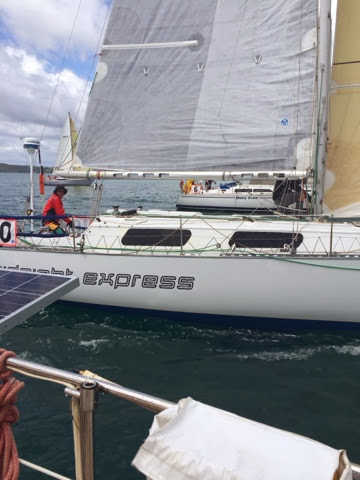
Back at home after a two day cruise aboard ‘Ladybird’, I’m ready for bed! But here’s a taster photo.


The owner and skipper at the helm looks pretty contented.


Do you find information about Boat Blind Plans are you looking for? If not, below may help you find more information about the Boat Blind Plans. Thank you for visiting, have a great day.

Saturday, February 27, 2016

Boat Plans Bolger | Two Day Cruise – Part 3 Bradwell to Burnham

Boat Plans Bolger


Goodbye to Bradwell Power Station - literally it is being taken apart


Skipper at the helm


The skipper checking Ladybirds mooring before leaving


Goodbye and thank you Ladybird

A planned short coastal cruise may not be straightforward on account of the weather. Would there be enough wind? Would there be too much? Would we be able to sail the boat back to Burnham according to the navigator’s plan?

The 48 hour forecast at the start of the cruise predicted that the wind would be from a southerly direction between force 3 and 4. In which case, we would be on a reach for the first leg from Bradwell Marina to the Swin Spitway, and after tacking through the Spitway we could expect a long fetch with the wind coming from a point forward of the beam.

In practice, that is how it nearly panned out, except we arrived a little too early at the Spitway. Instead of being there shortly before low water when the ebb would have been almost stationary, the tide was still ebbing into the Wallet. In order to make over the ground, we had to have help from the engine. At that point, just when we did not want the wind to head us, it did! However, we were able to make 240 degrees while lee-bowing the ebb.

There are two passages between the Buxey Sand to the north and Foulness Sand to the south. We chose the northerly one marked by Swallowtial port hand buoys. The alternative passage was through the Whitaker Channel, but had we taken that option, the tide and wind would have swept us away from Burnham. The better tack was with the wind coming from the port hand side.

At the outset, on leaving Bradwell Marina, the sky was grey, and there was fine drizzle, which was not at all inviting. No wonder only two other yachts were under sail, each of them considerably larger than Ladybird, and as usual, the larger ones sailed faster. For us that was helpful, because we could see where they were heading which was in the direction we wanted to go, i.e., towards the starboard hand Bench Head buoy. From there we would continue to the N W Knoll buoy and the Eagle before arriving at the Spitway.

The sky began to clear, revealing bright blue openings between clouds to the SW. The wind increased to about a force three. Instead of sailing at two knots, the yacht was doing over four. We should have reduced sail to slow us down, for arriving at the Spitway as planned at 09.45 – just before low water. Low water at Burnham was at 1016, but out at the Spitway it was earlier. The further north you go on the North Sea, the earlier high water is. That’s because the flow or flood travels from north to south, and consequently the ebb moves in the opposite direction earlier than in the south.

The advantage of sailing at neaps is having deeper water at low water than at springs, because the range of water between high and low is less. For us, this was helpful because sailing on a south-westerly heading we could avoid the ebb by creeping over the shallows in the vicinity of the Swallowtail buoys. Beyond and in the Whitaker Channel, the flood made itself felt by lee bowing the yacht on both tacks – short when on starboard tack, and long on port.

On approaching Foulness Sand, south of the Sunken Buxey shoal, we drew close to seals basking on the sandspit. There you can sail very close to the sand in the proximity of Buxey No 1 buoy. Seals are not daft; they know were they can catch fish more easily -that’s where their prey have less room to pass between narrows; in this case, Sunken Buxey shoal to the north and Foulness Sand to the south.

Here we came to the highlight of our cruise. Conditions couldn’t have been more perfect – smooth water, sunshine, beautiful cloud formations, sparking water, fresh air, and a perfectly trimmed boat. Ahead, lay our destination. Seven miles away, we would have to stop sailing, tidy the boat, pack our gear into the tender, and call it a day. We did not wish our time away. Instead, we wanted to continue.

One thing I forgot to mention was the wonderful hospitality of the skipper. I never once had to prepare food or make a drink. He did it all! I was entirely spoiled and mollycoddled.

Thank you, Captain for a great time.

Links

Two Day Cruise – Part 1
http://bills-log.blogspot.co.uk/2015/08/two-day-cruise.html

Two Day Cruise - Part 2 (Burnham to Bradwell)
http://bills-log.blogspot.co.uk/2015/08/two-day-cruise-part-2-burnham-to.html

Bradwell Power Station
https://en.wikipedia.org/wiki/Bradwell_nuclear_power_station

Wild Foulness
http://www.bbc.co.uk/essex/content/articles/2009/04/17/nature_trail_foulness_feature.shtml

Ray Sand Swatchway

http://creeksailor.blogspot.co.uk/2011/05/ray-sand-swatchway.html


Do you find information about Boat Plans Bolger are you looking for? If not, below may help you find more information about the Boat Plans Bolger. Thank you for visiting, have a great day.

Thursday, February 25, 2016

Boat Plans Catamaran | And They Are Off Leg Two

Boat Plans Catamaran


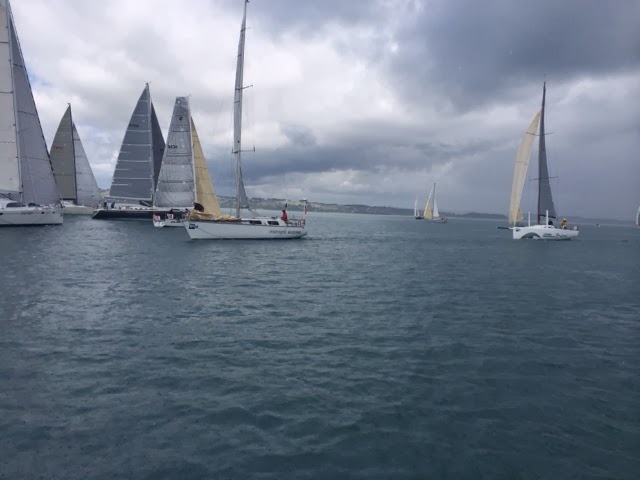
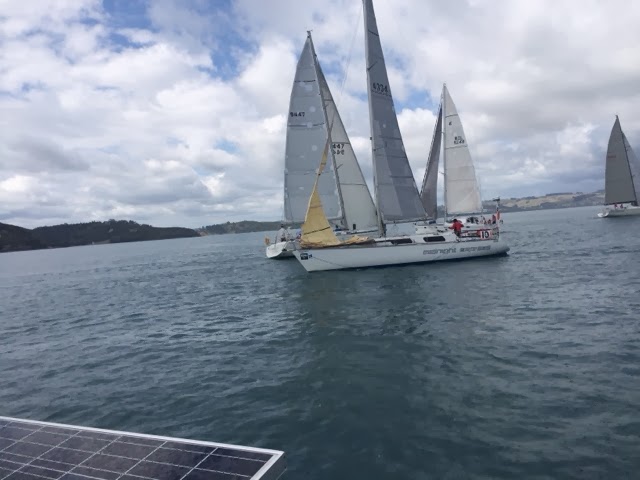
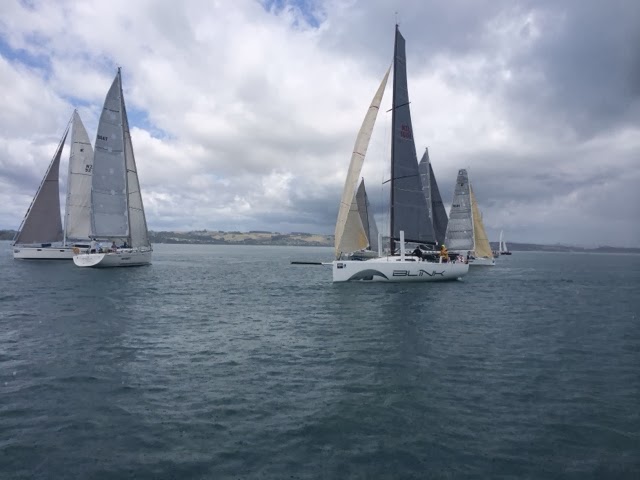
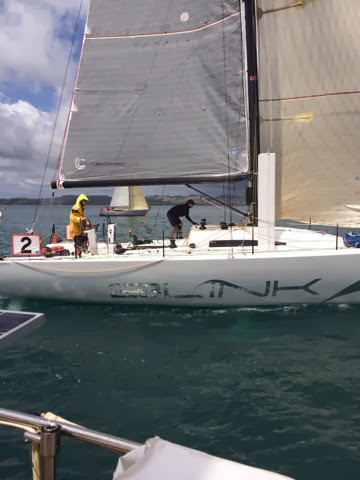
Great start to the RNI in some breeze and a gentle but warm little tropical shower with the sun poking through. Blink in clear air with a nice conservative start given 500 odd miles to Welly. Beaut day for a glamour sail to the Cape and down the west coast to Welly. Fantastic!!!!


Do you find information about Boat Plans Catamaran are you looking for? If not, below may help you find more information about the Boat Plans Catamaran. Thank you for visiting, have a great day.

Tuesday, February 23, 2016

Boden Boat Plans Australia | Nearly Woohoo Number Two

Boden Boat Plans Australia


The forecasts for yesterdays race were wildly varied.  All seemed to agree on northerly or norwester, Metservice up to 30 knots, Predictwind 12-15, Windfinder & WindGuru 20ish gusting high 20s.  And varied is what we got.

We went out and put up the main planning to put a reef in.  Then we decided to go out and have a look at it.  It was OK with full main, high teens mostly, but with the occasional gust in high 20s and one of 30ish.  So we didnt reef.  Just before the start we didnt reef again, despite a few minutes of sustained high 20s, correctly anticipating that wed be underpowered in the inevitable (relative) lull to follow.

Craig at the back of the Boat and Joerg at the front made a great job of calling the start at the pin, we absolutely nailed it, hit the line on the gun and in clear air we cleared out.  So at the first top mark we had a pretty useful lead, first by a hundred metres or so on Ran Tan and Revs.  Wedgetail, our other big Div 1 competitor apparently had a horror show, over at the start, then several gear failures had them abandoning.  Through the race they were seen to be without at headsail a couple of times, maybe headsail foil problems?
Update: Wedgetail was distracted by lost battens before the start, and broke 2 vectran halyards (jib, and then fractional that jib was re-hoisted on)

We got neatly around the mark, didnt have our kite ready but given how blustery it was, it didnt matter too much, speeds were reasonable even without a kite ...


We eventually hoisted and unfurled successfully ... we headed deep since we were only just above lay line for the next mark and wanted to avoid gybing, so with the apparent wind at about 120° - 140° werent fully powered up, but again moving along nicely in the right direction


At this point we realise theres a bit of a problem.  The furling line has escaped from its bungy restraint, come loose, and has fallen in the water, but not before wrapping itself around the furling drum and lower sail during the end of the unfurl.  A brief discussion resulted in a unanimous conclusion that this would make furling at the next mark (now not so far away, and approaching at circa 17 knots) quite difficult.

Joerg had stepped in as bowman, so now stepped up.

He attached himself to a halyard just in case of trouble and went out on the 1 metre long fixed prod.  Thats not such a big deal - yes, theres the occasional sensation of being sprayed with a firehose and its not really for the faint of heart, but theres a very sturdy bobstay to hook feet onto so you can stay upright.  It was the next bit that was really impressive, another 2.5 metres of thinner, very wet, just as slippery carbon tube, with quite literally nothing to hold on to.  In a gusty 20+ knot breeze.  With the boat still doing 10-15 knots and 80kg on the very very front end of the boat.


Things might have got very messy at this point, but they didnt.  A discussion from many months ago with Rob about the pros and cons of an even longer prod popped into my head, including one of the factors being how more weight at the front might not be so great.


So, that sorted, we furled the A5 _very_ early in case of trouble furling, and turned up towards the Somes Island mark.  The  next leg was across to Days Bay and we thought it would be a broad reach.  We debated A3 vs A6, decided A3 just in case we needed to head higher.

 It turned out even the A3 wouldnt give us enough height, and we had trouble re-furling so sailed waaaay off course trying to get this down.   Huey organised another solid high-20-knot blast while we attempted this.  Which wasnt a great help.


At the end of the above clip is Ran Tan still heading up to the previous mark, gives an idea of how much lead we had here.  Eventually we got that furled and down too, but had to sail a few hundred metres pretty much upwind to the next mark.  We tacked soon after, again upwind to the mark north of Somes, still ahead but having lost about half of our lead.  The following beat was pretty uneventful except for being headed on the way to a rounding, trying to pinch to get around, and touching the mark.

We went into a 360 turn... didnt bother with the boards, gybed, carried lots of speed into a roundup.  we were so quick through this that the trimmers hadnt had a chance to trim on - but our boat speed was pretty good so I just flipped the boat through the wind and away we went back on course  That was a really quick 360 penalty, thanks mostly to the trick (acumen I think its called) steering system controlling the independent angles of our twin rudders.

We knew there was a tight reach to the mark we thought we were rounding next.  So we 2-sail reached to it in the now pretty solid norwester.  Good speed, good angle, still some lead left, good times. Only it wasnt the right mark.  Ran Tan, now at a lower angle and powered up in more breeze away from the hills, were suddenly making up a lot of ground.  No worries, here comes the correct mark and weve not lost all of our lead.  Well launch the A6 again, this time at a nice hot angle, in 25-30.  Here comes that really big ride weve been waiting for, well be gone in a blizzard of white water, yeehas and woohoos.  Probably a new Personal Best for Blink, probably high 20s boat speed.  Here we go ...

For the second time we were thwarted by a furling issue.  We didnt see why, but we think there was a contra-roll of the looser foot of the mostly furled sail as it started to unfurl spontaneously in the big breeze.  We struggled with it for ages, staying high so wed be able to come down once the hyperdrive kicked in.  It didnt, and by the time we sorted things out we were badly positioned, Ran Tan overtook us, sailing a better angle in more breeze.  Getting close to the finish, and wind had backed off where we were, not enough pressure to get us out of second.  Except, wait, heres some...


As youll see from the vid above, and here, we couldnt quite catch up again, so we ended up second on line, having given away a substantial lead.  Despite the suboptimal second half of the race, we were also, somehow, first on club handicap and second on PHRF.


And that big ride is something we are still looking forward to...

Thanks to Mark H for the great pics and video

Do you find information about Boden Boat Plans Australia are you looking for? If not, below may help you find more information about the Boden Boat Plans Australia. Thank you for visiting, have a great day.

Saturday, February 20, 2016

Boat Plans And Patterns | From one step to two steps

Boat Plans And Patterns


One step at the time.
But it became time.
So, for a 28 sport fisherman.
This has to be the man.


The Offshore fishing version is based on the Mako 28, showing the same deck arrangement and stowage.
I have added the two pods to offer protection and utilities. One for a small head, the other for personal gear and provisions. To my knowledge there are very few aluminum 2 steps boats, and if any for sport fishing.


Do you find information about Boat Plans And Patterns are you looking for? If not, below may help you find more information about the Boat Plans And Patterns. Thank you for visiting, have a great day.
 

Download Boat Plans Copyright © 2016 -- Powered by Blogger